Anyone can demo an AI feature. We engineer the version that survives contact with real users: production LLM pipelines, real-time voice agents, semantic search — with cost controls, guardrails, and evaluation built in from day one.
Real-time LLMs, streaming STT/TTS voice bots, and encrypted vector search.
Some of our AI consults end with us recommending less AI than the founder walked in with. A feature that hallucinates in front of customers, or costs $2 in tokens per user interaction, is worse than no feature — it burns trust and margin at the same time. We'll tell you which of your ideas AI genuinely improves, which need guardrails to be shippable, and which are cheaper and better as plain software. You're hiring engineers, not evangelists.
Already have a half-working AI feature someone else built?
Learn about Product Rescue →Explore how we built and scaled production AI features for real users.
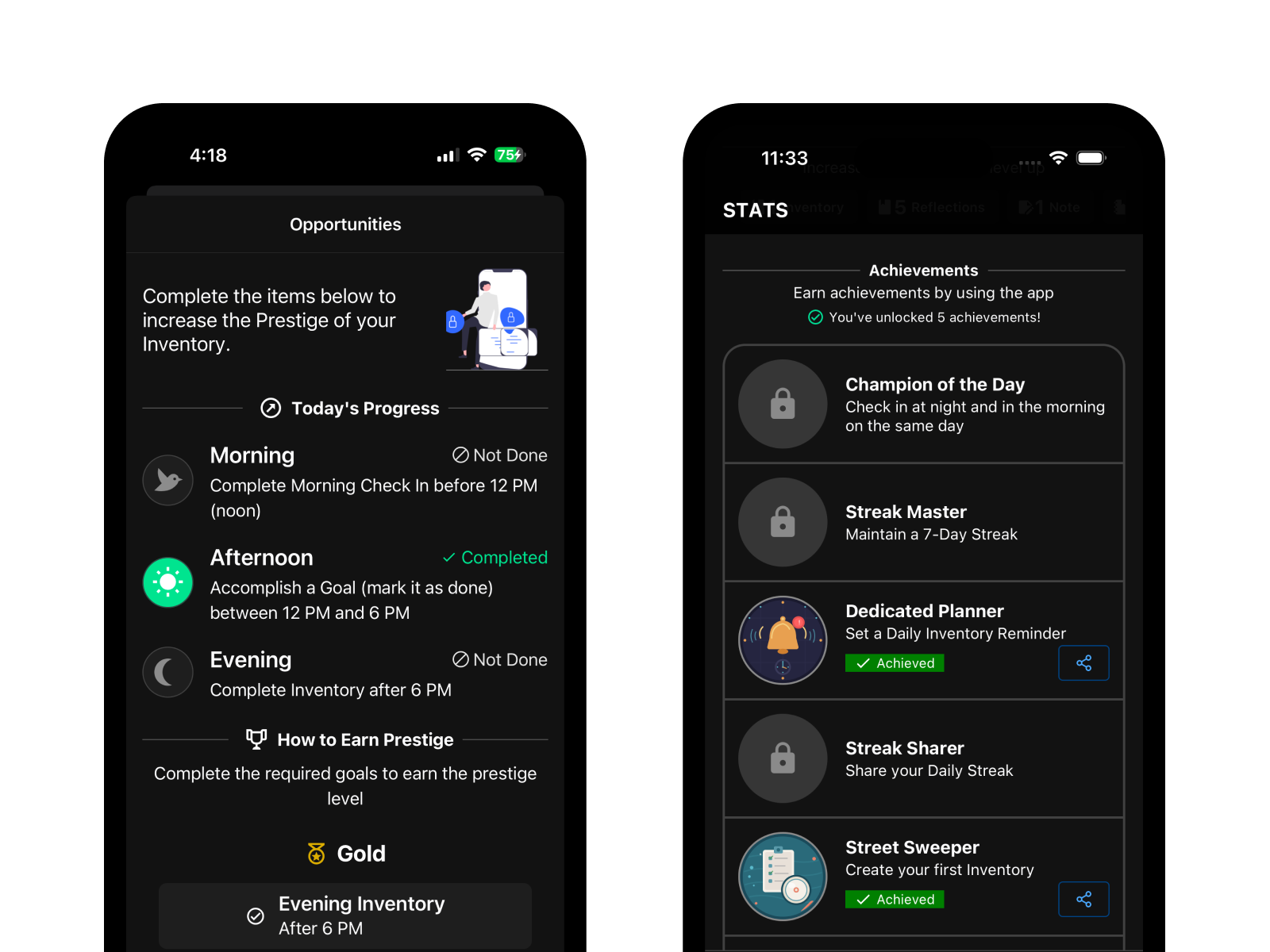
An AI-assisted daily recovery reflection and step inventory application — built to handle the most sensitive user data there is. Recovery journals demand more than a privacy policy: MTS runs private vector embeddings and encrypted semantic search, so even we can't read what users write.
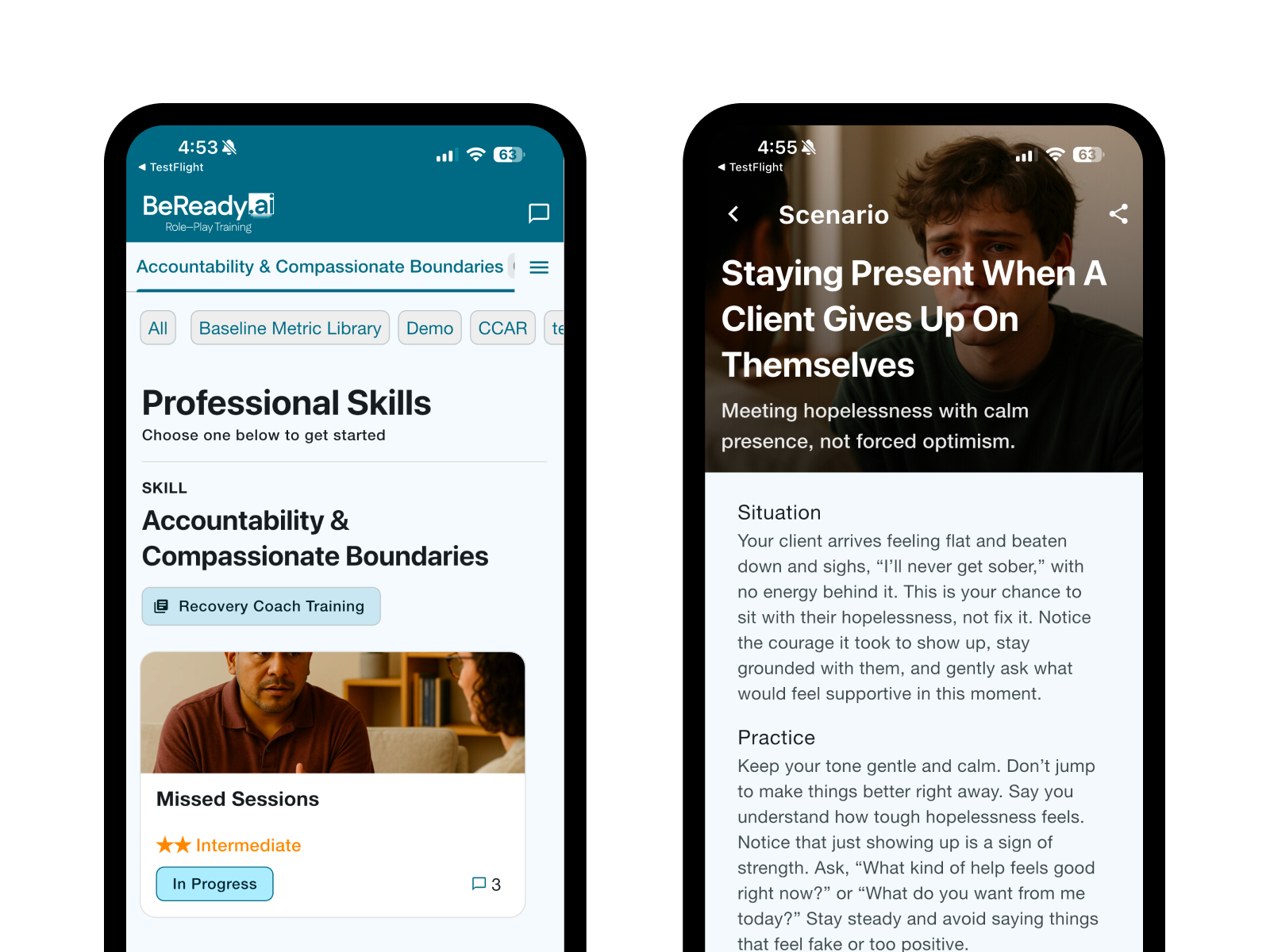
An AI interview roleplay coach featuring low-latency voice agents and streaming audio evaluation. Users practice realistic behavioral interview scenarios with specialized AI personas that provide instant metric feedback.
Pragmatic AI systems designed for cost control, security, and low latency.
Scenario-driven agents with persistent memory, custom guardrails, and automated evaluation metrics — so behavior is tested, not hoped for.
Streaming speech-to-text and voice synthesis for natural, sub-second interactive audio sessions — voice agents users don't hang up on.
Semantic vector search pipelines for document indexing, sentiment analytics, and personal reflection search — your data made queryable, without shipping it to anyone's training set.
Maybe not — and we'll tell you. On the consult we'll sort your ideas into three buckets: genuinely better with AI, shippable with guardrails, and cheaper as plain software. Roughly a third of the "AI features" founders bring us land in that last bucket, and their products are better for it.
Server-side prompt caching, semantic pre-filtering, and lightweight fallback models, so expensive LLM calls happen only when they earn their cost. We architect to a cost-per-interaction budget the same way we architect to a latency budget — it's a number we agree on, not a surprise on your first invoice.
We build vendor-neutral: the model layer is swappable by design, so as the market moves — new models, better prices — your product moves with it instead of being married to one provider's 2026 lineup. Model choice is an engineering decision we make per feature, based on quality, latency, and cost.
Treated as an engineering problem, not an accepted quirk: constrained outputs, retrieval grounding so answers come from your data, guardrails on what agents may claim or do, and automated evaluation suites that run before release — the same way our standard requires tests on business logic. For features where a wrong answer is unacceptable, we design flows where the AI drafts and a human — or deterministic code — decides.
We configure zero-retention enterprise API pipelines (Azure OpenAI, GCP Vertex, and equivalent tiers), so your users' data is encrypted in transit, isn't stored by the model provider, and isn't used for training. Our own product MTS handles recovery journals — we build to the standard that data demands.
Typically $8,000–$15,000 on top of a base build, depending on complexity — voice agents at the top of that range, simple LLM-powered workflows at the bottom. The Scope Estimator will show you a range for your configuration, and the scoping call turns it into a fixed number.
Book a free 30-minute consult. We'll tell you honestly which of your ideas AI improves, outline model choices and prompt architecture, and give you a fixed-price roadmap — including the cost-per-interaction number nobody else will quote you.
Book a free consult →